Guides · Everglades City, Florida
Everglades City in a Day: A Practical Itinerary
The stone-crab fleet still works the water out front, and the tourists who come through are mostly here for the park, not the town—which is exactly why a day here still works.
Start with the water
The morning belongs to the Gulf. Head first to the Gulf Coast Visitor Center at 815 Oyster Bar Lane. It is the Marjory Stoneman Douglas visitor center for Everglades National Park, which means it is the practical gateway to the Ten Thousand Islands. The rangers run the boat tours from here, and if you are going to see the park without your own hull, this is where you line up. The center itself is straightforward: maps, permits, restrooms, and the only official National Park presence in town. The building sits at the edge of the Barron River, and the dock is the busiest spot in Everglades City by late morning.
Do not skip the Ernest Hamilton Observation Tower on Copeland Avenue. It is a short walk from the visitor center, a wooden tower that gets you above the mangroves for a look at the rivers and islands that make this place what it is. It is not dramatic. It is useful. On a clear day you can see how the whole coast works—the water, the tree line, the flats. That is the point.
The town that built a road
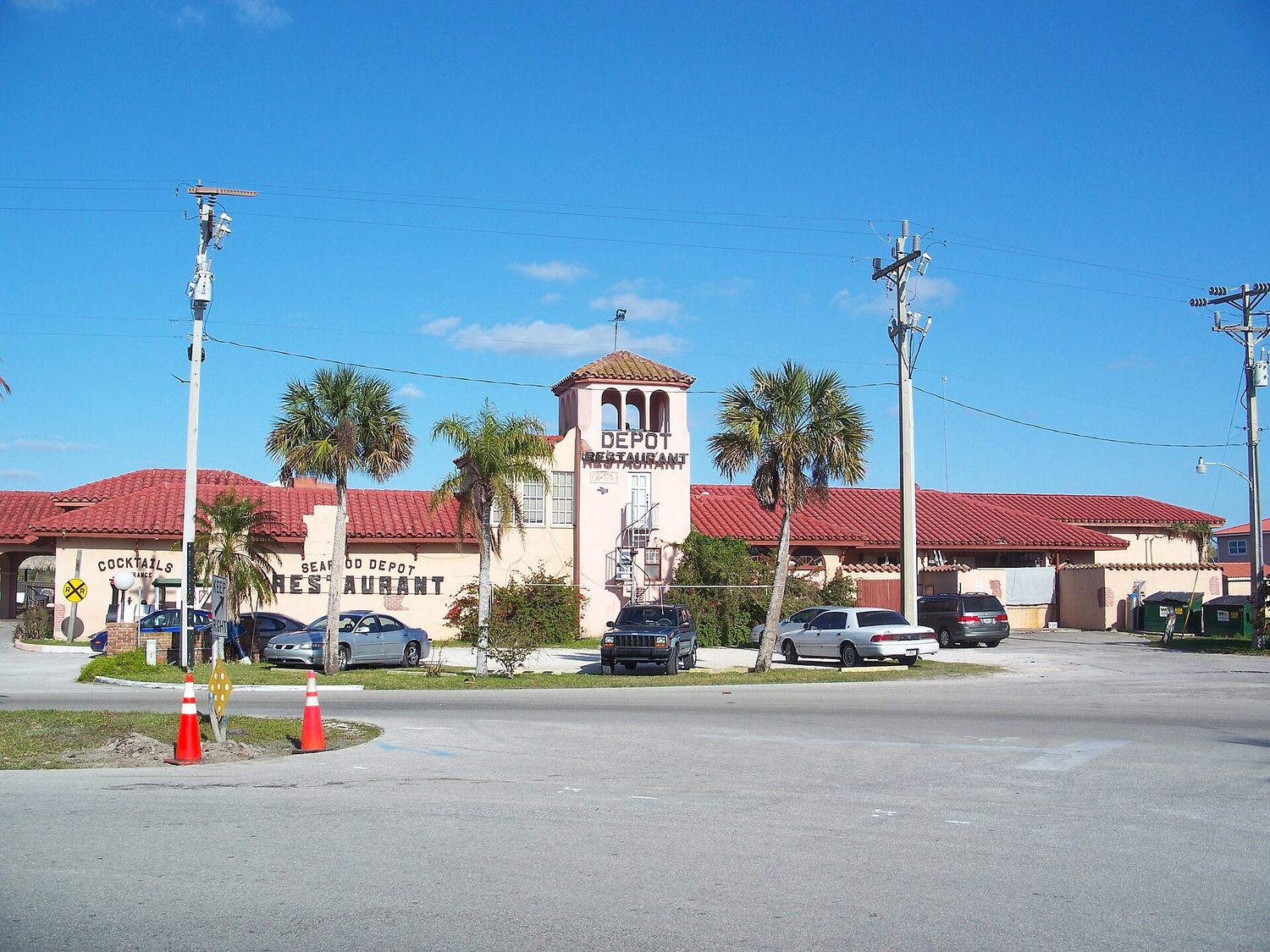
Everglades City exists because Barron Collier bought land here in 1922 and built a road. He funded State Road 29 from here to Immokalee, finished in 1929, ahead of the Tamiami Trail. The Atlantic Coast Line railroad reached town in 1928, the southernmost point the line ever got. The community incorporated in 1923, renamed itself the City of Everglades in 1953, and settled on Everglades City in 1965. It was the county seat of Collier County from the county's creation in 1923 until two years after Hurricane Donna hit in 1960, when the legislature moved the seat to East Naples.
The 2020 census counted 352 people. The median age is 59.1. The unemployment rate is zero percent, which sounds better than it is—it means the people who live here work, and the people who do not work have left. Median household income is $75,163, and the median home value is $371,400. Of 343 housing units, 234 are vacant, and 203 of those are held for seasonal or recreational use. This is a town where most of the roofs are empty most of the year.
Late lunch, no rush
By early afternoon, the boat crowds thin out. That is the time to eat. Camellia Street Grill on West Camellia Street carries a 4.3 rating from over two thousand reviews, which tells you it is the reliable default. Island Cafe on Collier Avenue sits right in the middle of town and pulls a 4.4 from nearly two thousand reviews. Both are casual, both are on the water side of the street, and both will be full of people who just got off a boat. If you want the local vote, Wildman's pizza, pasta and pythons on Buckner Avenue South has a 4.7 from 377 reviews—the smallest crowd, the highest score. The name is not a joke, and the place knows exactly what it is.
Everglades Rod & Gun Club on West Broadway is the other option, a 4.2 from 689 reviews. It is the oldest building in town still doing what it always did, and it has been a lodge, a bar, and a meeting hall for the people who work the water. It is not fancy. It is not trying to be. If the day is hot and you want a cold drink in a dark room, this is the room.
Skip The Diving Pelican Restaurant & Bar on Copeland Avenue unless you need the bar—it rates 4.1 from 303 reviews, and the food is fine, but there is nothing it does that the other places do not do better. Subway on the Tamiami Trail is there if you are on a schedule and need a sandwich. It is a Subway. That is fine. The town has a island life creations on Collier Avenue, but the listing is thin—no rating, no category beyond the name—so treat it as a stop, not a destination.
The afternoon is for walking
After lunch, walk the blocks. The town is small enough that you can cover it in an hour without trying. The Rod & Gun Club is worth a second look from the outside—the porch, the river side, the way the building sits low to the water. The observation tower you already did, but the walk back past it is different in the afternoon light. The commercial docks are working docks. Boats get cleaned. Traps get stacked. The people doing the work are not there for your benefit, and they will not perform for you.
That is the whole town. There is no shopping district, no art walk, no second act. The point of Everglades City is that it is a working stone-crab town, and the work happens on the water. The land side is a few streets of houses, a handful of restaurants, and the park headquarters. If you need more than that, you are in the wrong place.
If you are here in February
The Everglades Seafood Festival runs three days in February and brings 40,000 to 50,000 people into a town of 352. That is not a typo. Live country music, carnival rides, arts and crafts, and stone crab—the thing this coast is named for. Proceeds go to schools, local charities, hurricane relief, and the commercial fishing fleet. If you are here for that, plan accordingly. The town will be ten times its normal size, and the roads will be a parking lot. The locals will tell you it is fine. They are used to it.
If you are here any other month, you will have the place mostly to yourself. The seasonal residents outnumber the permanent ones by almost two to one. The median age is 59. The pace is what you make of it.
One day is enough
A day in Everglades City is a morning on the water, a late lunch, and a walk through a town that lost its county seat and kept working. The visitor center gets you into the park. The restaurants feed you. The observation tower gives you the lay of the land. The Rod & Gun Club gives you a place to sit. That is the whole itinerary, and it is enough.
Do not come here expecting a resort. Come here because you want to see the edge of the Everglades, and this is where the road ends. The town does not owe you anything. It will not pretend to be something it is not. That is the charm, if you want to call it that. The people who live here call it Tuesday.
Every business named above is one we hold a listing for, and every date traces to a source on our sources page. We do not describe menus, interiors or service we have not verified. Details change — confirm before you travel.