Guides · Everglades City, Florida
The Best Photo Spots in Everglades City
The best photographs in Everglades City are not about postcard sunsets. They are about light on water, tin roofs, and the working geometry of a town built for one purpose.
Start at the water
The Gulf Coast Visitor Center at 815 Oyster Bar Ln is the town's front door. It sits on the Barron River, where the stone-crab fleet ties up and the air smells of diesel and brine. From the docks, you can frame the boats against the mangrove line at golden hour. The center itself is the Marjory Stoneman Douglas Visitor Center for Everglades National Park, which means the crowd is purposeful. They are here to get on the water, not to pose. Shoot the working boats, the bait sheds, the way the light flattens the river at noon and goes amber by late afternoon. A 4.4 rating from 669 reviews suggests the place earns its traffic, but the real subject is what floats past it.
The courthouse that lost its county
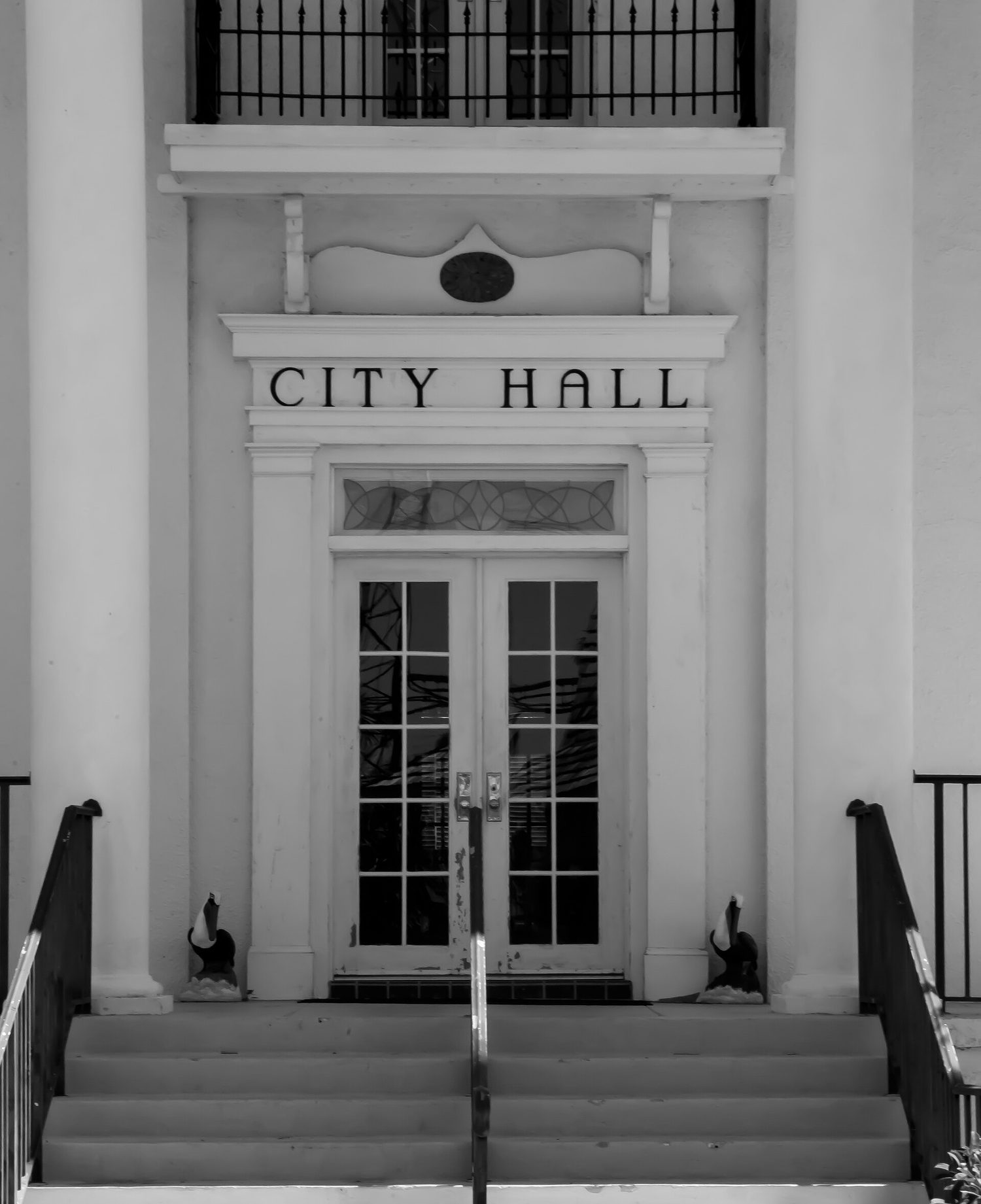
Walk one block north to 102 Copeland Ave N and you will find the Old Collier County Courthouse. It holds a perfect 5.0 rating, though only two people have bothered to review it. That is fitting. This building witnessed the county seat's entire drama: the creation of Collier County in 1923, the road money, the railroad, the hurricane in 1960, and the legislature moving the seat to East Naples two years later. The courthouse is now a museum, but the architecture does the storytelling. Photograph it straight on, in the flat morning light, and let the columns and the small-town scale carry the history. A county seat that lost its county leaves a particular silence. The building knows it.
The tower above the swamp
Take Copeland Avenue north to 875 Copeland Ave and climb the Ernest Hamilton Observation Tower. At 4.2 from 77 reviews, it is the least celebrated of the town's landmarks. That is the point. From the top, you see the Everglades the way Barron Collier first saw them: a sheet of grass and water running to the horizon. The tower gives you the widest view in town. Bring a long lens. The light moves fast over the sawgrass, and the good frames are the ones where the clouds cast moving shadows across the marsh. It is a working view, not a scenic overlook. Treat it as such.
The museum's back porch
The Museum of the Everglades sits at 105 Broadway Ave W, in a building that was once the town's laundry and power plant. The 4.7 rating from 368 reviews is the strongest in town, and the reason is the collection: photographs, maps, and artifacts that tell the Collier story in detail. For photography, skip the interior exhibits and find the exterior angles. The old industrial bones of the building, the brick and the roofline against the sky, photograph better than any glass case. The museum is also the closest thing the town has to a memory bank. Collier began buying land here in 1922. The community incorporated in 1923. The name changed twice before settling on Everglades City in 1965. That entire arc fits inside this building's walls.
A marker and a street corner
At the corner of South Copeland Avenue and Broadway Ave E, the Everglades Community Church Historical Marker is a two-review curiosity with a 4.5 rating. It is not grand. It is a sign on a corner. But it marks where the town's civic and spiritual life overlapped, and in a place this small, that corner still matters. Photograph it in context: the marker, the street, the houses behind it. This is where the 352 residents live their actual days, not where the tourists stop. The frame should include the neighborhood, because the neighborhood is the subject.
How to think about this town
The census numbers tell you what the photos should show. There are 343 housing units, and 203 sit empty for most of the year. The median age is 59.1. The unemployment rate is zero. The median home value is $371,400, which is a lot for a town of 208 people, but the vacancy rate of 234 units says most of those houses are not homes. They are seasonal. February is different. The Everglades Seafood Festival brings 40,000 to 50,000 people into a town that holds 352. For three days, the streets fill with carnival rides, country music, and stone crab. The crowds are part of the story, but the quiet weeks are the better pictures.
The practical part
Shoot early or shoot late. The midday sun flattens the color out of the water and the tin roofs. The town's streets are short and walkable, so you can cover the courthouse, the museum, the marker, and the visitor center on foot in under an hour. Save the tower for when the clouds are moving. And when you are done, resist the urge to make it pretty. This is a working stone-crab town. It was built to build a road, served as a county seat, lost that seat, and kept going. The photographs that matter are the ones that respect that.
Every business named above is one we hold a listing for, and every date traces to a source on our sources page. We do not describe menus, interiors or service we have not verified. Details change — confirm before you travel.