Guides · Everglades City, Florida
Everglades City vs Arcadia: Two Florida Small Towns Compared
Everglades City and Arcadia are both small Florida towns built around a single industry, but one sits at the edge of a national park and the other at the edge of a cattle region.
The Shape of the Place
Everglades City is a town of 208 people, according to the 2020 census, with 343 housing units. More than two-thirds of those homes—234 units—are vacant, and 203 are held for seasonal or recreational use. The median age is 59.1 years. This is a place where the working population is small and the permanent residents are mostly older. The unemployment rate is 0 percent, which tells you less about prosperity than about how few people live there and how many of them have to work.
Arcadia sits about 100 miles north, and it is a different kind of small town. It has a rodeo, the Arcadia All-Florida Championship Rodeo, and it serves a ranching economy. Where Everglades City looks out over water and mangrove, Arcadia looks out over pasture and palmetto. The comparison is not about which is better. It is about what happens when a town’s reason for existing changes.
A County Seat That Lost Its County
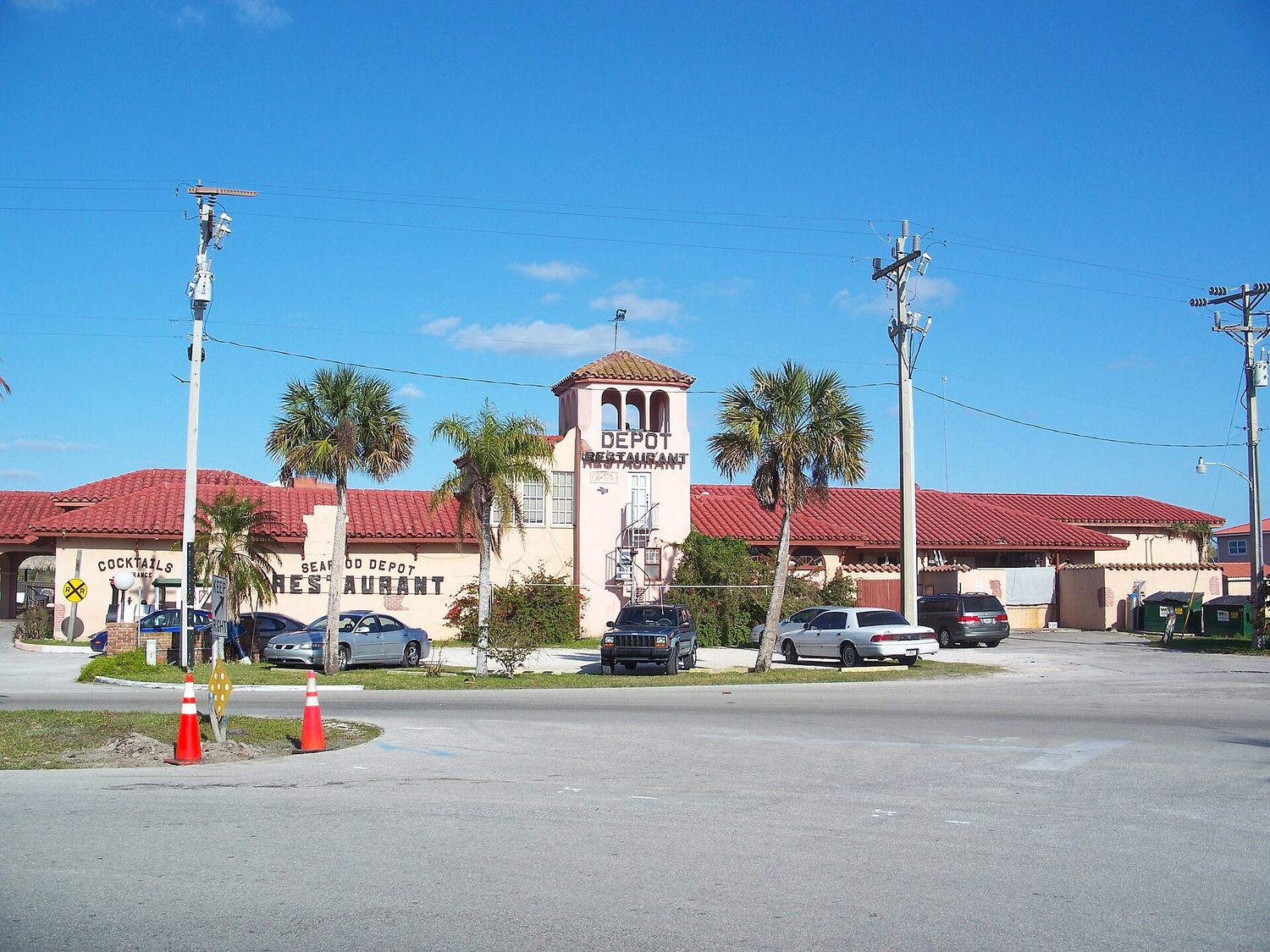
Everglades City was built on purpose. Barron Collier began buying land here in 1922, and the community incorporated as the Town of Everglades in 1923. That same year, Collier County was created, and Everglades City became its seat. Collier funded State Road 29 from Everglades City to Immokalee, finished in 1929, ahead of the Tamiami Trail itself. In 1928, the Atlantic Coast Line reached town—the southernmost point that railroad ever got.
The town was named for the Everglades it sits at the edge of, and its successive charters renamed it twice before the present form stuck in 1965. It became the City of Everglades in 1953 and the City of Everglades City in 1965. But the county seat did not last. Hurricane Donna struck in 1960, and two years later the legislature moved the county seat to East Naples. Everglades City lost its reason for being a county town. The 2020 population was 352, though the census counted 208 people in the city proper.
Arcadia never had that kind of fall. It is the seat of DeSoto County, and it has stayed that way. It did not lose its county. It did not get hit by a hurricane that rearranged its civic life. Its rodeo is a fixture, not a recovery effort.
What the Numbers Say
The census figures draw the difference sharply. Everglades City has a median household income of $75,163 and a median home value of $371,400. Median gross rent is $1,987. About 32.8 percent of residents have a bachelor’s degree or higher. The median age is 59.1 years.
These are not poverty numbers. They are the numbers of a town where the people who live there have means, but the town itself is mostly empty much of the year. The 234 vacant units are not abandoned. They are seasonal homes. The 203 units held for seasonal or recreational use confirm that. Everglades City is a place people come to, not a place people move to for work.
Arcadia’s numbers would be different—lower home values, lower incomes, a younger median age, and a higher share of permanent residents. It is a working town in a way that Everglades City no longer is. The rodeo brings people in for a weekend, but the town does not depend on seasonal occupancy the way Everglades City does.
The Festival That Swamps the Town
Once a year, Everglades City’s small permanent population is overwhelmed. The Everglades Seafood Festival runs three days in February and brings 40,000 to 50,000 people to a town of 352. There is live country music, carnival rides, arts and crafts, and the stone crab this coast is named for. Proceeds go to schools, local charities, hurricane relief, and the commercial fishing fleet.
That is a festival that does not just fill the town. It multiplies it by more than a hundred. For three days, the vacant houses and the empty streets are not the story. The story is the crowd.
Arcadia’s rodeo is similar in spirit but different in scale and character. It is a regional event that draws people who already live in the area. It does not turn the town inside out. It confirms what the town already is.
The Road and the Park
The other thing that keeps Everglades City alive is the park. The Marjory Stoneman Douglas Visitor Center for Everglades National Park is in town. That brings a steady trickle of visitors who are not there for the festival. They are there for the swamp, the birds, the airboats, the silence.
State Road 29, Collier’s road to Immokalee, still runs north out of town. It was finished in 1929, and it was the road that made the town possible. Today it is also the road that lets people leave.
Arcadia has no national park. It has the rodeo grounds and the cattle. It has a different kind of landscape and a different kind of history. It never had to be invented by a wealthy man with a road to build. It grew up on its own.
The Honest Comparison
Everglades City is not a hidden gem. It is a town that lost its county seat, lost its railroad, and lost most of its permanent population. What remains is a small, older community that lives alongside a national park and fills up once a year for a seafood festival. It is not forgotten. It is just small.
Arcadia is a town that kept its county seat and kept its identity. It is not a tourist destination in the way Everglades City is. It is a place where people live and work and go to a rodeo.
Common questions
- Why is Everglades City not the county seat anymore?
- Everglades City was Collier County's seat from 1923 until two years after Hurricane Donna struck in 1960, when the legislature moved it to East Naples. The town's population today is 352 people, and it remains a working stone-crab town.
- What is there to do in Everglades City?
- The Marjory Stoneman Douglas Visitor Center for Everglades National Park is here. The Everglades Seafood Festival in February brings 40,000 to 50,000 people for live country music, carnival rides, arts and crafts, and stone crab. Otherwise, it's a quiet town of 352.
- How did Everglades City get started?
- Barron Collier began buying land here in 1922, and the community incorporated as the Town of Everglades in 1923. He funded State Road 29 from Everglades City to Immokalee, finished in 1929, and the Atlantic Coast Line reached town in 1928—the railroad's southernmost point.
- Is Everglades City expensive to live in?
- The median home value is $371,400 and median gross rent is $1,987. Median household income is $75,163, with 0 percent unemployment. Note that 203 of 343 housing units are for seasonal or recreational use, so many homes sit vacant part of the year.
- What's the population of Everglades City?
- The 2020 population was 352 people, though the census figure for the town itself is 208. Median age is 59.1 years, and 32.8 percent of residents hold a bachelor's degree or higher. It's a small, older community.
- How is Everglades City different from Arcadia?
- Arcadia is 100 miles north and hosts the All-Florida Championship Rodeo. Everglades City is a coastal stone-crab town at the park's edge, with the Seafood Festival in February. Arcadia is inland ranch country; Everglades City is about the water and the swamp.
Every business named above is one we hold a listing for, and every date traces to a source on our sources page. We do not describe menus, interiors or service we have not verified. Details change — confirm before you travel.